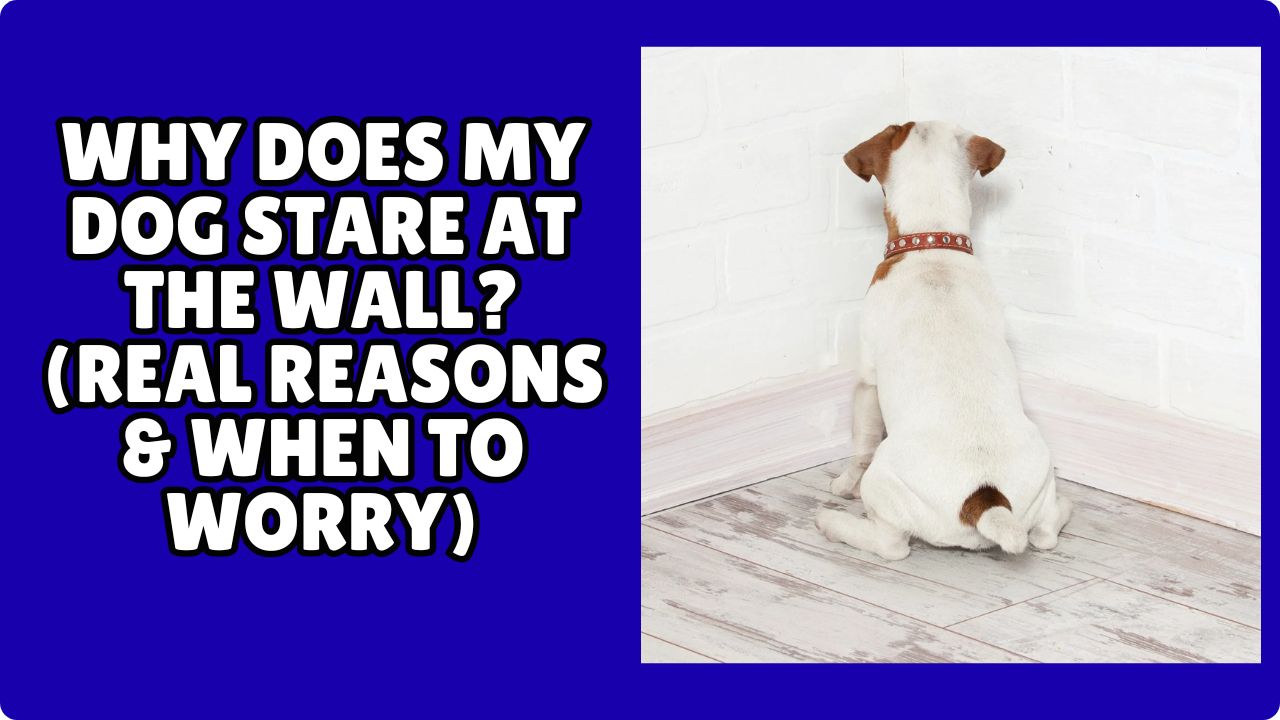
Why Does My Dog Stare at the Wall? (Real Reasons & When to Worry)
If you’ve ever caught your dog standing still and staring at the wall, you’re not alone. Many dog owners feel confused—or even scared—when this happens, especially if their dog seems alert but unresponsive.
So, why does a dog stare at the wall?
The answer isn’t always serious, but in some cases, it can be a sign that something isn’t right.
Let’s break it down clearly.
Is It Normal for a Dog to Stare at the Wall?
Sometimes, yes.
Other times, no.
Dogs experience the world very differently than humans. What looks strange to us may have a simple explanation. However, repeated or long episodes of wall-staring should never be ignored.
Understanding the reason depends on:
- How often it happens
- How long it lasts
- Your dog’s age and behavior
Common Reasons Why Dogs Stare at the Wall
1. Your Dog Is Hearing or Sensing Something You Can’t
Dogs have extremely sensitive hearing and smell. Your dog may be:
- Hearing pipes, rodents, or insects inside the wall
- Smelling something unusual
- Noticing vibrations or distant sounds
In this case, wall-staring usually:
- Lasts a short time
- Stops when the sound or smell disappears
This is normal behavior.
2. Your Dog Is Bored or Mentally Understimulated
Dogs that don’t get enough mental or physical stimulation may develop odd habits.
Signs this could be the reason:
- Your dog stares at walls often
- Lack of exercise or playtime
- No new toys or activities
Boredom-related wall-staring usually improves with:
- More walks
- Puzzle toys
- Training sessions
3. Anxiety or Stress Can Cause Wall-Staring
Anxious dogs may fixate on walls as a coping behavior.
Possible triggers include:
- Loud noises
- Changes in routine
- Separation anxiety
- New environments
If your dog also shows signs like pacing, whining, or hiding, anxiety could be the cause.
4. Cognitive Dysfunction (Common in Senior Dogs)
Older dogs can develop Canine Cognitive Dysfunction, similar to dementia in humans.
Signs include:
- Staring at walls or corners
- Getting stuck behind furniture
- Confusion
- Changes in sleep patterns
If your senior dog suddenly starts staring at walls, this should be taken seriously.
5. Vision Problems
Dogs with vision loss may stare at walls because:
- They can’t properly judge space
- They feel disoriented
- Shadows and light confuse them
This is more common in:
- Older dogs
- Dogs with cataracts or eye disease
6. Neurological Issues (Rare but Serious)
In rare cases, wall-staring may be linked to neurological problems such as:
- Seizure disorders
- Head trauma
- Brain inflammation
Red flags include:
- Long episodes
- Lack of response when you call your dog
- Head pressing
- Sudden personality changes
When Should You Worry About Your Dog Staring at the Wall?
You should contact a veterinarian if:
- The behavior happens frequently
- Episodes last several minutes or longer
- Your dog seems confused or unresponsive
- The behavior appears suddenly
- Your dog is elderly
Early evaluation can prevent serious issues from getting worse.
What Should You Do If Your Dog Keeps Staring at the Wall?
Here’s what you can do right now:
- Observe closely
Note how often it happens and how long it lasts. - Try to distract gently
Call your dog’s name or offer a treat. - Increase mental stimulation
More walks, playtime, and interaction can help. - Schedule a vet visit if unsure
Especially for senior dogs or sudden changes.
Can Wall-Staring Be Prevented?
While not all causes are preventable, you can reduce the chances by:
- Keeping your dog mentally active
- Maintaining a routine
- Providing proper nutrition
- Scheduling regular vet checkups
Final Thoughts
Seeing your dog stare at the wall can be unsettling, but it doesn’t always mean something is wrong. Many cases are harmless and temporary.
However, trust your instincts as a pet owner. If something feels off, it’s always better to get professional advice.
Your dog depends on you to notice changes—and acting early can make all the difference.
🐾 Helpful Tip for Dog Owners
If your dog shows new or repeated strange behaviors, keeping a simple behavior journal can help your vet make faster and more accurate decisions.